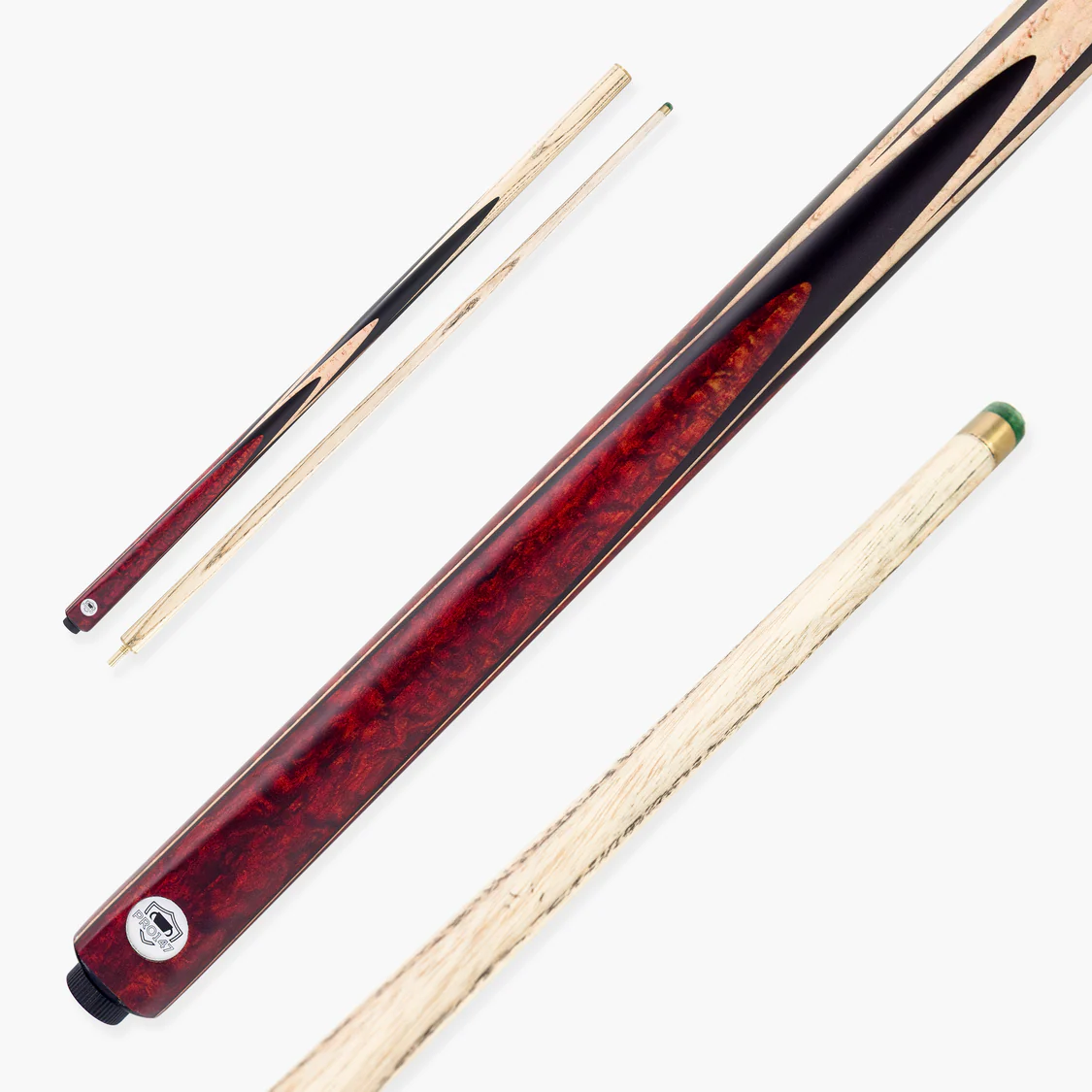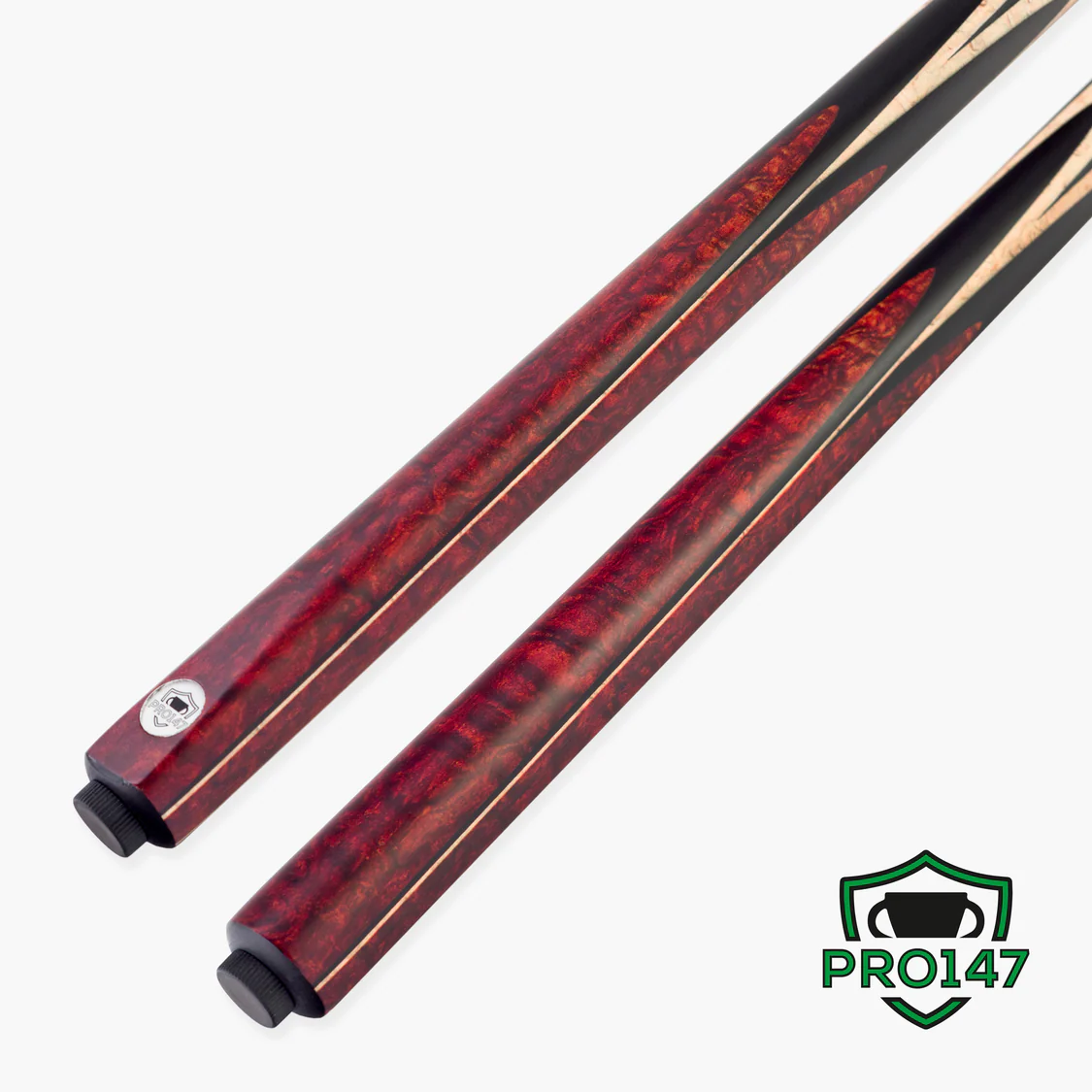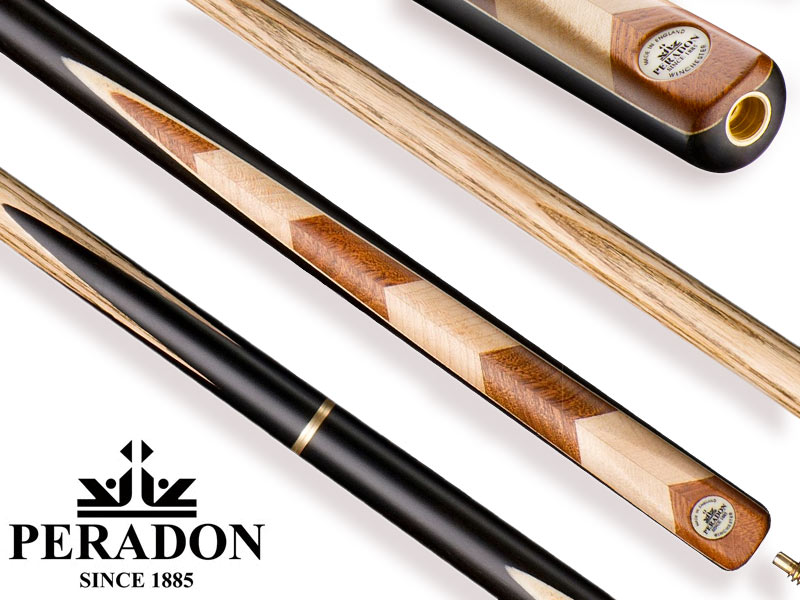
How to choose a snooker cue
Choosing the right snooker cue depends on your playing level, preferred feel, cue length, weight, tip size, joint type and budget. A good snooker cue should feel comfortable in your bridge hand, cue smoothly through the shot and give you confidence with both control and power. For many players, the best cue is not the most expensive cue, but the one that feels balanced, consistent and suited to the way they play.
At Bulldog Billiards UK, we stock a wide range of snooker cues for beginners, club players, league players and experienced cue sports enthusiasts.
What should you look for in a snooker cue?
The main things to consider are:
Cue length
Most full-size snooker cues are around 57–58 inches, but shorter cues may suit juniors, smaller players or rooms with limited space.
Cue weight
Many snooker players prefer cues somewhere around the medium-weight range, but the right weight is personal. A lighter cue can feel easier to control, while a heavier cue may feel more solid through the shot.
Tip size
Snooker cues usually use smaller tips than pool cues. A smaller tip can help with fine cue ball control, but it may also feel less forgiving if your cueing is inconsistent.
Joint type
Snooker cues are commonly available as one-piece, 3/4 jointed, centre-jointed or multi-jointed cues. A one-piece cue gives a traditional feel, while jointed cues are easier to transport.
Budget
Beginners do not need to overspend, but it is worth choosing a cue that is straight, comfortable and properly suited to snooker rather than buying purely on appearance.
One-piece, 3/4 jointed or centre-jointed?
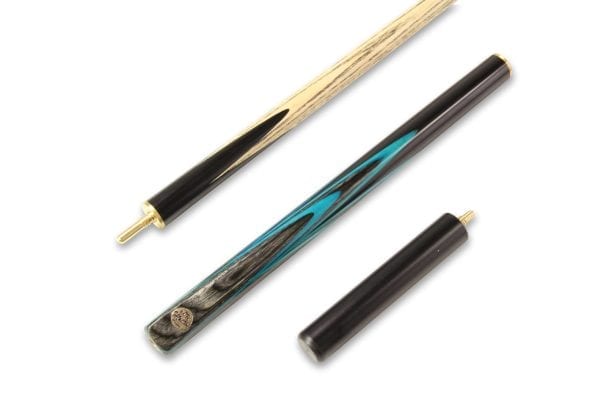
A one-piece cue is the most traditional option but is harder to transport. A 3/4 jointed cue gives a similar feel while fitting into a shorter case. A centre-jointed cue is more compact and convenient, making it a popular choice for players who travel with their cue.


What is the best snooker cue for a beginner?
A beginner should usually look for a reliable, straight, comfortable cue with a sensible tip size and weight. It does not need to be expensive, but it should feel balanced and be suitable for snooker rather than general cue sports.
Need help choosing?
If you are unsure which snooker cue to choose, Bulldog Billiards UK can help you compare different cue types, joint styles and accessories so you can find a cue that suits your game and budget.
FAQs
What size tip should a snooker cue have?
Snooker cue tips are commonly around 9mm to 10mm, although the best size depends on your cue, playing style and personal preference.
Is a heavier snooker cue better?
Not necessarily. Some players prefer the solid feel of a heavier cue, while others prefer the control of a lighter cue. Balance and comfort matter more than weight alone.
Should beginners buy a one-piece snooker cue?
A one-piece cue can be excellent, but it is not always practical. Beginners often choose a 3/4 jointed or centre-jointed cue because it is easier to store and transport.
One-piece vs 3/4 jointed vs centre-jointed cues
One-piece, 3/4 jointed and centre-jointed cues all have advantages. The best choice depends on how you play, how often you travel with your cue, where you store it and what feel you prefer. A one-piece cue gives the most traditional feel, a 3/4 jointed cue offers a strong balance between feel and portability, and a centre-jointed cue is usually the easiest to carry.
What is a one-piece cue?
A one-piece cue is made as a single full-length cue with no main joint. Many players like one-piece cues because they feel traditional, solid and continuous through the shot. They are commonly used in clubs, homes and venues where storage is not a problem.
The downside is transport. A full-length cue needs a long case and can be awkward to carry in a car or on public transport.
Best for: players who want a traditional feel and do not need maximum portability.
What is a 3/4 jointed cue?
A 3/4 jointed cue has the joint positioned lower down the cue, usually around three quarters of the way along. This leaves a longer shaft section than a centre-jointed cue and can give a playing feel closer to a one-piece cue.
A 3/4 jointed cue is a popular choice for regular snooker players because it combines good feel with easier storage and transport.
Best for: players who want a cue that feels more traditional but still fits into a shorter case.
What is a centre-jointed cue?
A centre-jointed cue separates near the middle, making it compact and easy to carry. It is a practical option for beginners, casual players, travelling players or anyone who wants a cue that fits easily into a smaller case.
Some players feel a centre-jointed cue is slightly less traditional in feel than a one-piece or 3/4 jointed cue, but many good players use them happily.
Best for: convenience, travel and easy storage.
Which cue type should you choose?
Choose a one-piece cue if feel matters most and storage is easy.
Choose a 3/4 jointed cue if you want a strong balance of playing feel and portability.
Choose a centre-jointed cue if compact storage and easy transport are your priorities.
FAQs
Is a 3/4 jointed cue better than a centre-jointed cue?
Not always. A 3/4 jointed cue may feel closer to a one-piece cue, but a centre-jointed cue is easier to carry. The better choice depends on your priorities.
Do one-piece cues play better?
Some players prefer the feel of a one-piece cue, but a well-made jointed cue can still play very well. Comfort, straightness, balance and tip condition are all important.
What case do I need for a 3/4 jointed cue?
You need a case designed for 3/4 jointed cues. A centre-jointed cue case will usually be too short.
Browse our selection of cues